
Adhesives and mortars, defined by bond task and substrate
Organize adhesives and mortars around the material being bonded, the receiving surface and the project quantity basis. Request the proposed product with its companion preparation materials so offers can be compared as a complete package.
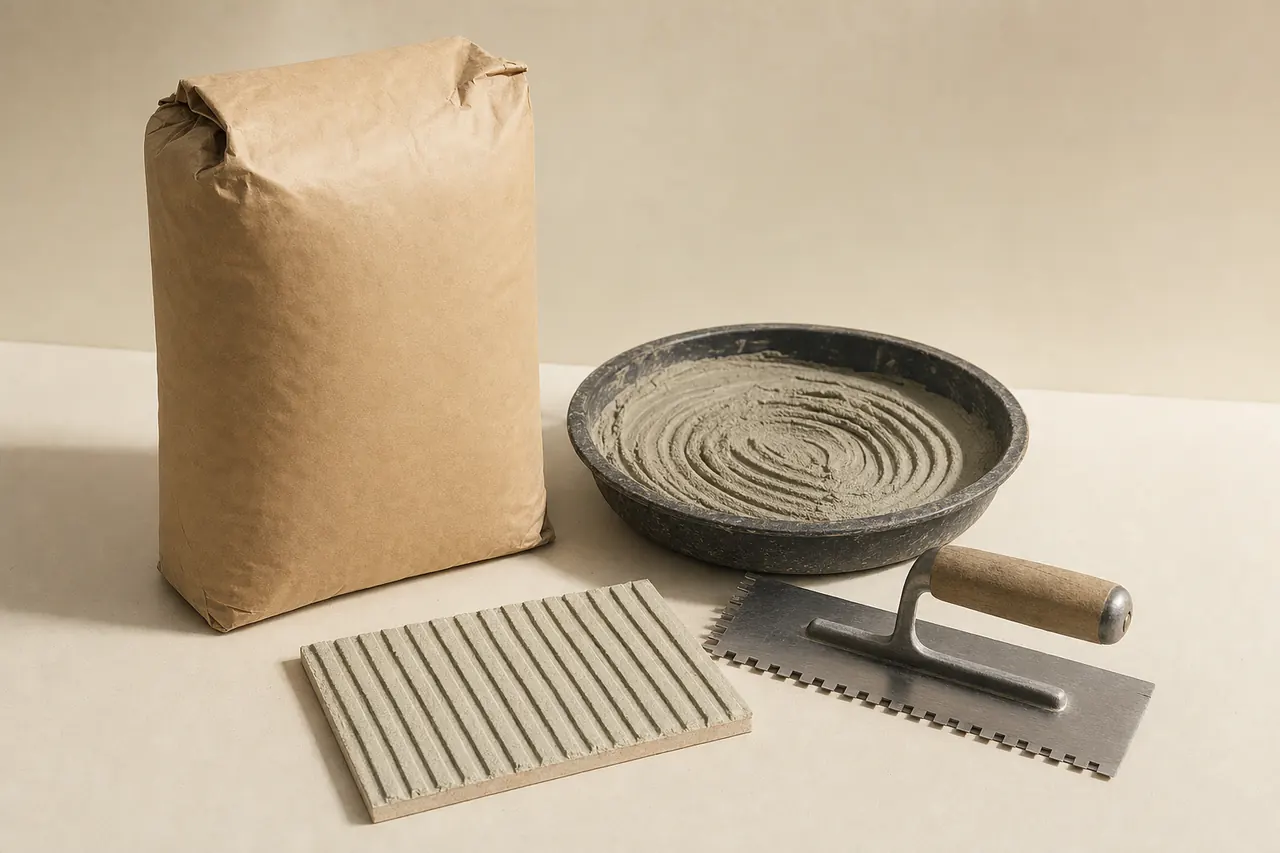
Start with the right material groups.
Tile and slab bonding materials
For fixing tiles or slabs, state the facing material, substrate and fixing zone. Ask suppliers to list required primers and trowel-applied mortars as one package.
Masonry and bedding mortars
List brick or block bedding mortars by unit type, joint detail and wall location. Keep structural concrete repairs in the separate repair and grout package.
Special bonding adhesives
For non-porous or demanding surfaces, identify the two materials being joined and exposure conditions. Avoid transferring a generic bond offer across different substrates.
A material price is only part of the package.
One schedule, clearly separated scopes. This is a request outline, not an installation drawing.
Included materials
Adhesives and bonding mortars arranged by fixing task, substrate and zone, with pack size and total quantity stated.
Connections & interfaces
Primers, preparation layers and companion materials identified with the proposed adhesive or mortar system.
Confirm separately
Site preparation, mixing, application, cleaning and waste responsibilities confirmed separately from material supply.
Six details that make offers clearer.
- Product designation and required performance
- Give the exact project-prescribed product name or performance class and the required bond or strength level for this location.
- Materials being bonded
- Name the facing or repair material and the substrate surface so compatibility can be assessed by the supplier.
- Substrate condition and preparation
- Describe the actual receiving surface condition and confirm whether preparation primers are included or listed separately.
- Zone and exposure conditions
- State the fixing zone and moisture, temperature or movement exposure relevant to the bond location.
- Pack content and quantity basis
- Request pack weight or volume, stated coverage assumptions and the total number of packs needed for the defined area.
- Shelf life and application constraints
- Ask for remaining usable life on delivery, storage requirements and any declared limitations for the proposed use.
| Item & description | Quantity |
|---|---|
| AM-01Tile adhesive for internal wall zone B; facing tile type and substrate condition attached for supplier review. | 80 bags |
| AM-02Bedding mortar for the scheduled masonry walls; unit type and joint details attached, pack mass stated. | 120 bags |
Example quantities only; no live prices or supplier offers. Use your project schedule for final values and ask suppliers to list deviations.
Three checks before you decide.
Coverage requirements vs pack size
Confirm each supplier's stated coverage assumptions against your project area before comparing total pack counts.
Preparation and companion products
Check primers, preparation layers and cleaning materials that may sit outside the headline adhesive or mortar price.
Use limitations and handling
Review declared application constraints and handling requirements against the project schedule and site conditions.
Details worth clarifying early.
Can one adhesive be reused across different tile surfaces?
Ask the supplier to confirm compatibility with both facing materials. Different weights, porosity and substrates may require separate product selections.
How should preparation primers be requested?
Request primers as named companion products within the same package so compatibility and total material quantity are visible together.
Turn your material schedule into a request.
Create a Matravo account to prepare your request. For account or sourcing-flow questions, visit support.