
Construction chemicals, selected against the task and substrate.
Organize adhesives, mortars, admixtures, sealants and repair products by the job they need to perform. Give suppliers the substrate, system and quantity basis so pack prices can be compared meaningfully.
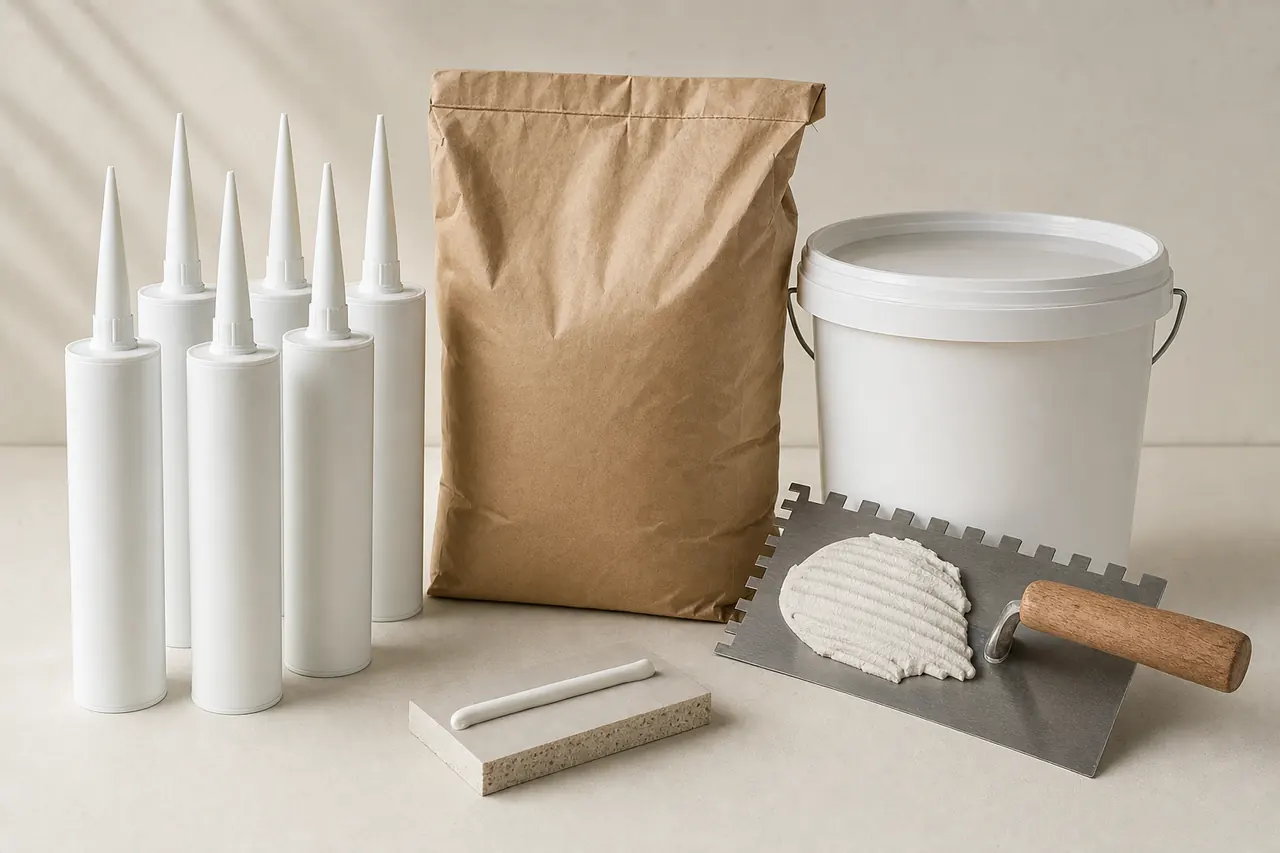
Start with the right material groups.
Adhesives and mortars
For bonding and finishing, state the material being fixed and the substrate. Request the proposed product and companion preparation materials as a defined package.
Concrete admixtures
For concrete production, reference the approved mix requirements and supplier coordination process. Do not infer a dosage or substitution from a generic product description.
Sealants, repairs and grouts
For joints, repairs and grouting, share the project dimensions and exposure conditions. List primer, backing and related materials where the proposed system requires them.
A material price is only part of the package.
One schedule, clearly separated scopes. This is a request outline, not an installation drawing.
Included materials
Separate products by task and substrate, with pack size, total quantity and a named project reference.
Connections & interfaces
Ask suppliers to identify compatible primers, backing materials and other companion products in the proposed system.
Confirm separately
Confirm preparation, application, tools and disposal responsibilities separately; a material offer is not an application method.
Six details that make offers clearer.
- Task and substrate
- Describe the bonding, joint or repair need and the actual substrate condition for supplier review.
- System compatibility
- Reference the specified product family or approved system and request clarification for substitutions.
- Relevant dimensions
- Provide joint or repair dimensions from the project to explain the quantity basis, not to prescribe a method.
- Project conditions
- Share relevant application and exposure conditions from the specification so limitations can be identified.
- Pack and shelf life
- Request pack weight/volume, delivery quantity and usable shelf life on arrival with storage information.
- Technical documents
- Ask for current product and safety data for the proposed materials and declared exceptions to the request.
| Item & description | Quantity |
|---|---|
| C-01Bonding mortar for finish zone A; substrate and compatible system per specification. | 60 bags |
| C-02Joint sealant for zone B; colour and joint schedule attached, primer listed separately. | 120 cartridges |
Example quantities only; no live prices or supplier offers. Use your project schedule for final values and ask suppliers to list deviations.
Three checks before you decide.
Pack price and coverage basis
Compare pack content and the supplier's stated quantity assumptions rather than bag price alone.
Companion materials
Check primers, backing and preparation materials that may sit outside the headline product price.
Shelf life and exceptions
Review storage conditions, remaining usable life and declared limitations for the proposed use.
Details worth clarifying early.
Can I compare two products by bag price alone?
Compare pack weight, the stated application basis and companion materials too. Ask each supplier to explain the quantity calculation.
Which documents should accompany the offer?
Request current product and safety data for the actual proposed material, plus the project-specific evidence you need.
Turn your material schedule into a request.
Create a Matravo account to prepare your request. For account or sourcing-flow questions, visit support.