Can a Material Category Guide Establish Project Compliance?
A material category guide can help you understand what to ask for. It cannot, by itself, establish that a particular product complies with your project. That distinction matters when a material looks suitable, its description sounds familiar, and a purchasing decision is approaching. Knowing the category is a useful starting point, not the same thing as having an approved product for a defined application.
For buyers, the practical question is not whether guidance is useful. It is how far that guidance can take the decision before project-specific evidence and qualified review become necessary. Keeping those roles separate helps prevent a sourcing conversation from becoming an unintended technical approval.
1. A guide prepares the conversation; it does not approve the material
Category guidance introduces the information that usually makes a material request clearer: intended use, dimensions, quantity, performance and supply constraints. It can help a buyer distinguish between products that share a broad label but serve different purposes. It can also reveal questions that should be resolved before suppliers prepare offers.
What it cannot do is certify a product, replace a project specification or complete a design review. Nor can it determine all locally applicable requirements for a site. Those tasks depend on the actual product, its proposed use and the requirements governing the project.
Matravo is a construction and landscape material RFQ-to-offer marketplace, not a material seller or an approval authority. Its category guidance supports preparation for sourcing. A buyer should not treat inclusion within a category, or wording in a guide, as evidence that a supplier's proposed material has been accepted for the project.
2. Suitability depends on the application, not just the category
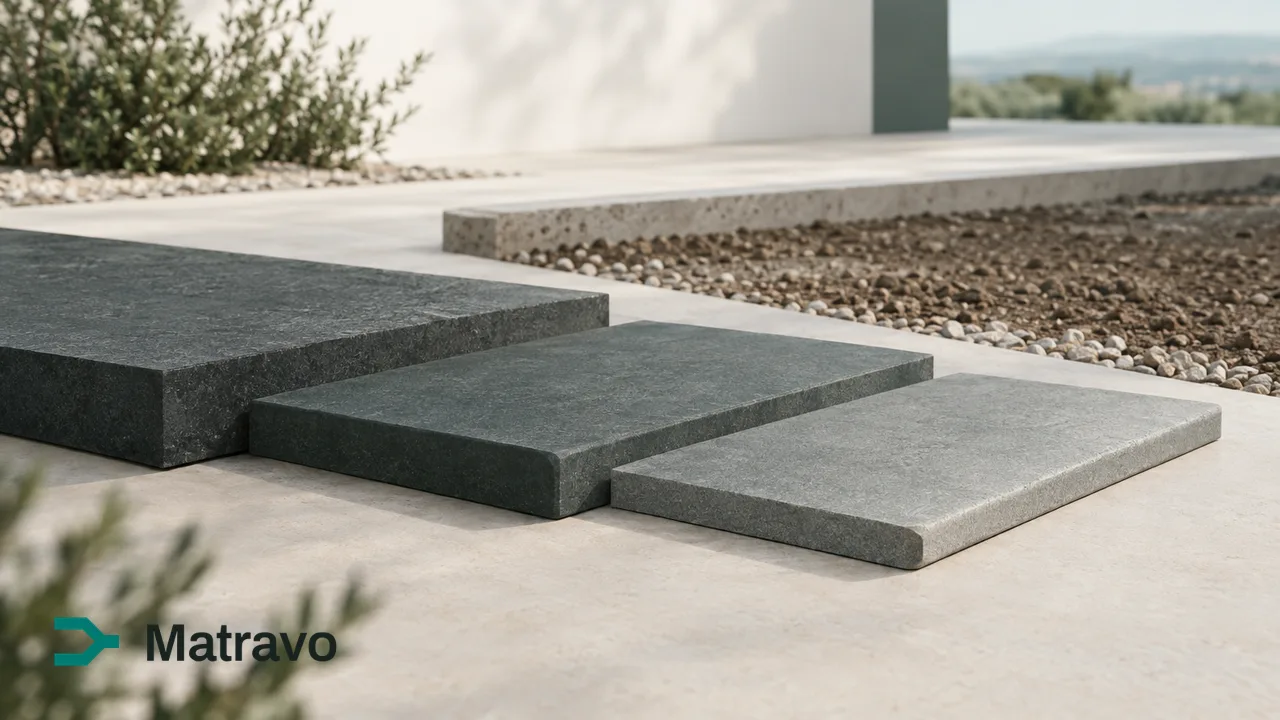
Consider a paving material proposed for an outdoor area. Its appearance and nominal dimensions may match the brief, yet the project team may still need to assess the intended loading, surface conditions, installation build-up and relevant performance requirements. A general description of paving cannot resolve those relationships for a particular design.
The same principle applies to soil or growing media, irrigation components and construction materials. A category name tells you broadly what something is. It does not establish how that exact product will behave within the proposed assembly, environment or operating conditions.
This is why a project requirement should be traceable to its source. A value taken from an approved specification has a different status from an example in an educational guide. Where a drawing or specification revision applies, identify it. Where a requirement remains undecided, label it as a point to clarify rather than choosing a plausible value.
The buyer's role is to preserve that distinction throughout sourcing. Clear procurement language should carry the project's requirements forward, not quietly create new technical decisions.
3. Evidence must connect the proposed product to the requirement
A supplier's technical information can support review, but the presence of a document is not the same as a conclusion. The useful question is whether the evidence addresses the requirement and covers the product or system actually being proposed. A document for a related range may leave an important gap.
When a project requires a technical document, test or declared performance, name it and identify what it must cover. Your qualified project team should determine whether the evidence is relevant and sufficient for the intended application. Procurement can organize the exchange without claiming to perform the technical assessment.
Quantities also need a stated basis. Pieces, linear metres, square metres, cubic metres, kilograms and tonnes describe different purchasing needs. Dimensions, thickness and pack contents can affect what an offer actually includes. A pallet or bag should not be assumed to contain the same amount across suppliers.
If a quotation uses a different unit, ask the supplier for the conversion and its assumptions. Make wastage or spare quantities explicit. These steps improve commercial clarity, but a consistent unit or a complete quantity calculation still does not establish technical compliance.
4. Involve the project team when the decision changes the design
Qualified review is needed when the question moves beyond describing the requirement and into deciding what is acceptable. Examples include a proposed alternative, a different thickness, a changed connection detail or evidence that does not clearly cover the intended use. These are not gaps that platform guidance should fill.
Ask the relevant qualified member of your project team to resolve the uncertainty against the specification, design and locally applicable requirements. Record the resulting decision in the purchasing brief so suppliers are responding to the same basis. If alternatives are permitted, distinguish that permission from approval of any particular alternative.
A lower-priced offer does not settle those technical questions. Separate commercial comparison from technical acceptance, and avoid treating an unanswered question as agreement. Where approval is still pending, make that status visible rather than describing the product as ready for purchase.
5. Source against requirements that your team has established
Once the technical basis is sufficiently clear, turn it into a focused request for quotation. Describe the intended use, separate the required items and state the essential requirements. Include the destination, requested delivery window and relevant packaging or access constraints. A requested window communicates your need; it is not a delivery guarantee.
Keep unresolved matters visible and route technical decisions back to the qualified project team. The category guide remains a preparation aid, while project specifications, applicable requirements and relevant evidence inform the approval process.
Ready to source against your project requirements? Visit the Matravo website and choose Create account, or Sign in if you already have an account. Use your established requirements as the basis for the buyer's sourcing request.