Can You Proceed with a Material Offer After a Drawing Revision?
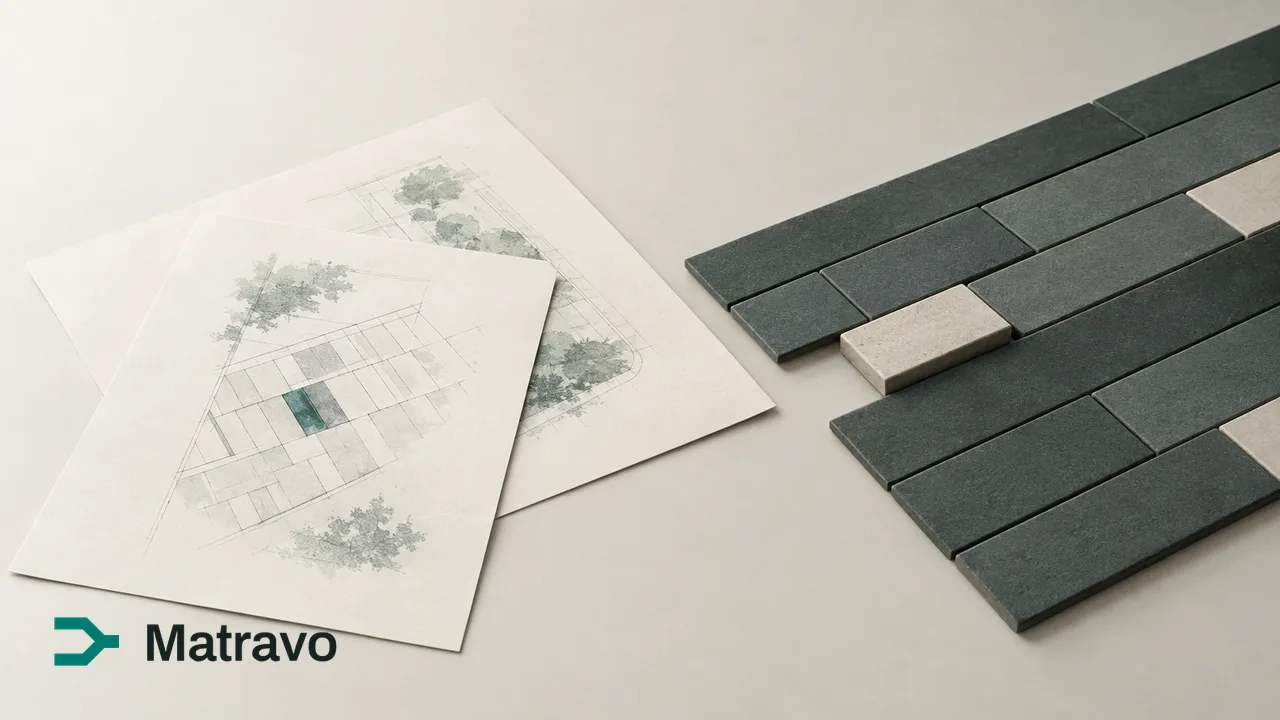
A revised drawing does not automatically make an existing material offer unusable. It does, however, create a question that should be answered before you commit: does the supplier’s proposed product and commercial commitment still apply to the current requirement? The answer depends on what changed, what the offer covered, and what the supplier confirms in writing.
For a buyer, the decision is not simply whether the revision looks minor. A small dimensional change can affect fabrication, while a conspicuous layout change might leave the material requirement untouched. On Matravo’s material RFQ-to-offer marketplace, keep the current request basis clear and resolve any gap with the supplier. Project-specific technical acceptance remains with your qualified project team.
1. Establish what changed before deciding to proceed
Start with the drawing revision referenced in the offer and the revision now intended for the work. Identify both clearly, including their dates where relevant. If the offer never named a revision, ask the supplier which information it used. Do not assume that the latest drawing in your project records was the drawing behind the quotation.
Then isolate the change affecting the offered material. This is a focused revision review, not a reason to restart the entire procurement exercise. Ask your project team whether the update changes the product requirement or only information unrelated to this supply.
- Does it change dimensions, thickness, finish, quantity, or the specified material?
- Does it affect performance requirements, connections, edge details, or installation interfaces?
- Does it alter delivery phasing, site access, or packaging needs?
- Does it introduce an unresolved detail that prevents a clear purchasing decision?
Keep uncertain points explicitly unresolved. A buyer’s assumption that a detail is “probably unchanged” is not a technical decision or a supplier commitment.
2. Obtain two distinct confirmations
The project team and supplier answer different questions. Your qualified project team determines whether the proposed material is technically acceptable for the revised design. The supplier confirms what it is offering and whether its product, availability, and commercial terms remain applicable. Neither confirmation should stand in for the other.
For example, a revised paving detail might require a different thickness at a vehicle crossing. Your project team must establish the applicable requirement and assess suitability. The supplier must then confirm whether the offered paving matches that requirement and whether the change affects the offer. An unchanged product name alone does not resolve the issue.
Equally, technical acceptance does not preserve an earlier price or delivery commitment. The supplier may accept the revised specification but need to change fabrication scope, quantities, packaging, or lead time. Proceed only when the technical decision and the supplier’s stated supply basis align.
3. Ask whether the existing offer still applies
A useful clarification identifies the offer, the previous drawing reference, the current revision, and the relevant change. Ask a direct question: can the supplier maintain its existing offer for this revised requirement, or must it issue an amendment? Avoid a vague request to “check the latest drawings,” which leaves the required response unclear.
You could write: “Your offer references revision B. Revision C changes the edge-piece dimensions; the project team is reviewing technical suitability. Please confirm whether your proposed product and quoted scope meet revision C, and identify any changes to price, quantity basis, availability, lead time, packaging, delivery, or payment terms.”
Ask for a response tied to the specific offer and revision, rather than a general acknowledgment that the drawing was received. On Matravo, web chat is available on the request before an offer: entitled sellers start threads, and buyers reply to existing threads. Opening phone or contact details after a deal is a separate rule, not the gate for web chat.
4. Pause when the commitment is still ambiguous
Pause if the supplier confirms receipt but not applicability, if the project team has not resolved a changed requirement, or if the commercial impact remains open. “We can supply this” may confirm capability without confirming the original price, scope, or schedule. Ask what exactly remains unchanged and what is being replaced.
Check timing carefully where the revision affects production or delivery. A quoted lead time needs a stated starting event, such as order confirmation or an agreed payment. Ask whether that basis still applies after the revision; do not treat an earlier indicative schedule as confirmation for changed work.
You may be able to proceed when the project team has resolved technical questions and the supplier explicitly confirms the current revision and applicable terms. If only part of the scope is unaffected, consider it separately only when the project team and supplier establish a clear boundary and address dependencies.
5. Keep one clear basis for the next commitment
Before proceeding, retain a clear written record of the current drawing reference, technical decisions, supplier confirmation, and any amended commercial terms. Make it evident which earlier details are superseded. This avoids leaving one party working from the original offer while another expects the revised scope.
Matravo connects material requests with supplier offers; it is not the material seller or a checkout service. Supplier confirmation and project-team decisions, rather than a platform response, establish the basis for your next commitment.
Ready to start a material request with a clear revision basis? Visit the Matravo website and choose Create account, or Sign in if you already have an account. Buyers can start free; identify the applicable revision and leave undecided requirements clearly marked for clarification.