
Acoustic insulation for partitions, floors and service enclosures
Acoustic insulation is ordered by where it sits in a wall, floor or service enclosure and what the assembly must achieve. Define the buildup, the material format and the adjacent components, then ask suppliers to declare the proposed product and its supporting evidence.
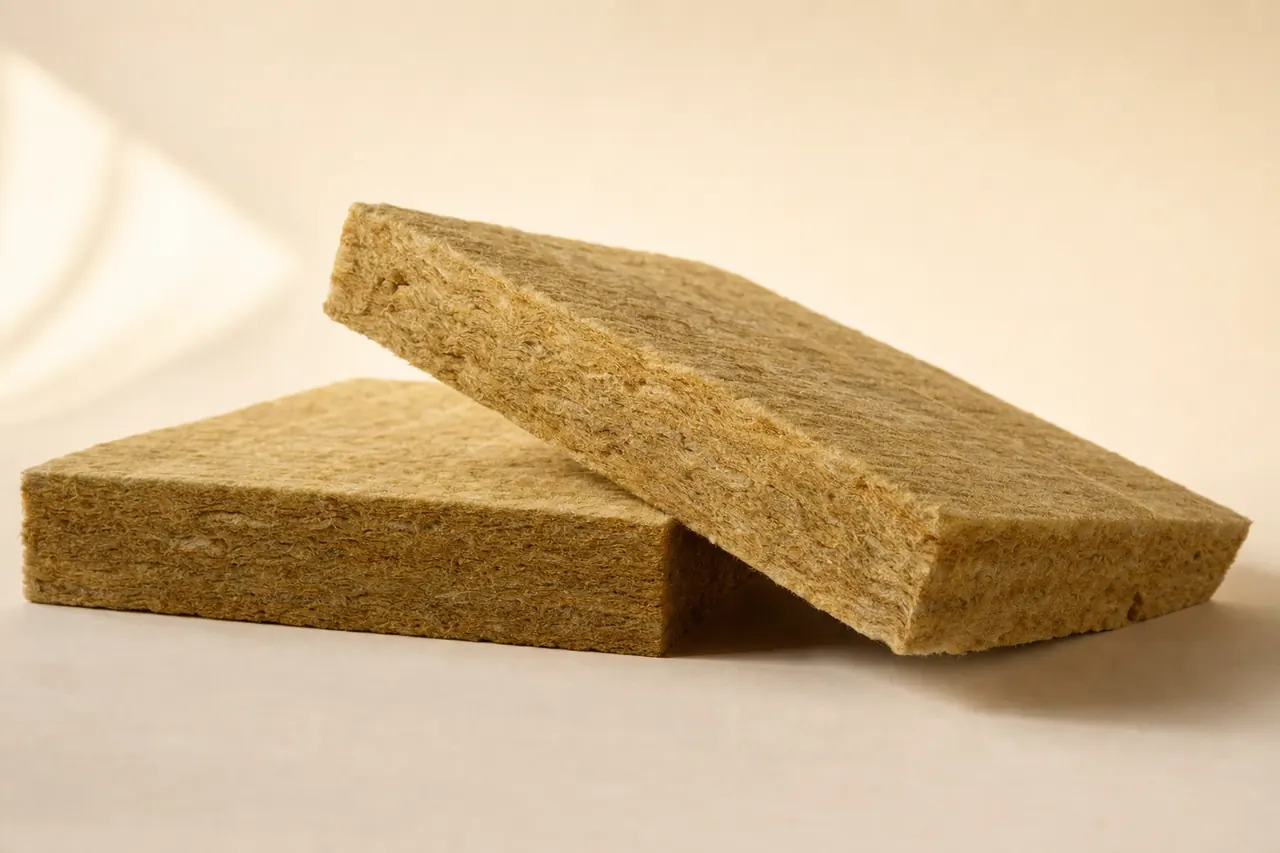
Start with the right material groups.
Partition and wall cavity insulation
For separating walls and internal partitions, state the cavity width, stud or block type and required acoustic objective. Specify boards or rolls by net area and deliverable condition.
Floor and intermediate slab treatments
For floating floors and ceilings below slabs, identify resilient layers, edge strips and cavity infill. Keep the buildup position of each component explicit in the request.
Service enclosures and duct wraps
For risers, pipe enclosures and mechanical spaces, supply a clear void size and required finish. Ask for compatible facing and fixing accessories rather than assuming a bare roll is sufficient.
A material price is only part of the package.
One schedule, clearly separated scopes. This is a request outline, not an installation drawing.
Included materials
State each acoustic layer by assembly position, material format, thickness and net area, linked to the current partition, floor or riser detail.
Connections & interfaces
List junction tapes, resilient strips, fixings and edge components, and state which supply package should include them.
Confirm separately
Confirm surface preparation, installation sequence, inspections and waste allowances with the supplier; do not infer a complete acoustic system from a single material line.
Six details that make offers clearer.
- Product designation and prescribed requirement
- Name the exact product type or requested designation and quote the project-prescribed acoustic performance or size requirement for the assembly.
- Assembly position
- State whether the material sits in a wall cavity, beneath screed, above a ceiling or around a service void.
- Format and density
- Request board, roll or mat format together with density or mass range relevant to the intended buildup.
- Thickness and cavity fit
- Provide cavity and layer dimensions from the approved assembly. Ask the supplier to identify any difference in product thickness or fit.
- Facing and accessories
- Specify required facings, edge strips, tapes and fixings, and ask the supplier to identify compatible products.
- Packaging and site handling
- Ask for pack sizes, clean storage requirements and phased quantities matching the installation sequence.
| Item & description | Quantity |
|---|---|
| AI-01Acoustic boards for internal partition cavities; thickness and density to match approved buildup. | 420 m² |
| AI-02Acoustic mat for floating floor area; supplier to declare roll width and mass per square metre. | 38 rolls |
Example quantities only; no live prices or supplier offers. Use your project schedule for final values and ask suppliers to list deviations.
Three checks before you decide.
Assembly-specific requirement
Compare each offer against the approved wall, floor or riser buildup, not only against a single product property.
Complete layer package
Confirm whether boards, mats and rolls are proposed with the correct facings, strips and fixings for the specified assembly.
Declared basis of performance
Ask the supplier to state which proposed layer and adjacent components support the declared acoustic result and to highlight any deviation.
Details worth clarifying early.
How do I avoid counting a shared thermal and acoustic layer twice?
List each physical layer once. If the same item has thermal and acoustic requirements, state both and request the relevant product and complete-assembly evidence.
How should cavity dimensions be stated for acoustic insulation?
Provide cavity and layer dimensions from the approved assembly. Ask the supplier to identify any difference in product thickness or fit against that construction.
Turn your material schedule into a request.
Create a Matravo account to prepare your request. For account or sourcing-flow questions, visit support.