Decide Wastage and Spares Before Setting the Material Quantity
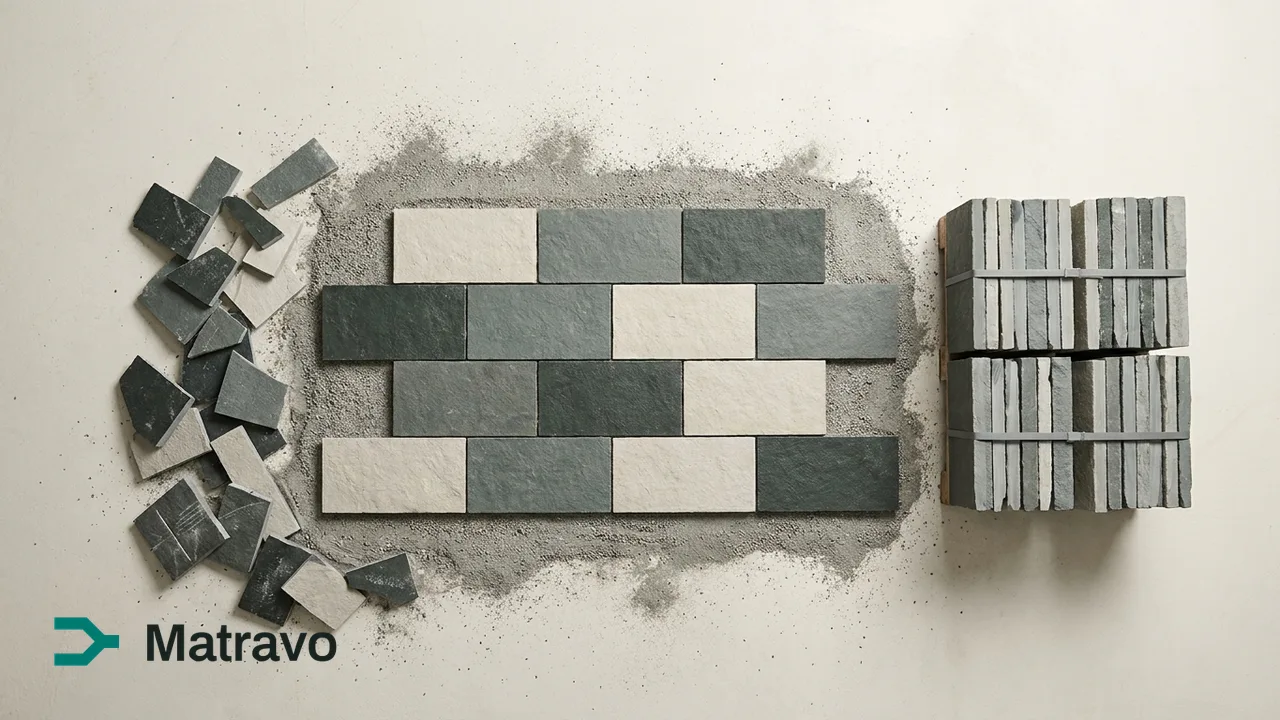
A material quantity can look precise while leaving an important question unanswered: what does that number include? A paving area might describe the finished surface only, or it might already allow for cutting and retained replacement pieces. If buyers and suppliers interpret the same number differently, their offers may cover different requirements.
Before requesting quotations, separate the project’s net need from installation allowances and materials intended to remain after completion. The aim is not to find a universal wastage percentage. It is to establish a clear quantity basis, have project-specific assumptions reviewed by the qualified project team, and make that basis visible to suppliers.
1. Separate net need, wastage, and retained spares
Start with three distinct questions: how much material is required for the completed work, what additional material may be needed to carry out that work, and what should be retained for later use? These quantities have different purposes and should not disappear inside an unexplained total.
- Net project need: the quantity associated with the specified finished work, before separately identified allowances.
- Installation allowance: additional material intended to address project-specific cutting, offcuts, or other agreed installation losses.
- Retained spares: material deliberately set aside for future replacement or maintenance rather than consumed during installation.
For paving, the layout and edge details may affect cutting needs. For a construction material supplied in bags, pack contents may influence the purchasable quantity. Neither situation establishes a standard allowance for every project. Ask the responsible project professionals to confirm the appropriate basis.
Also check whether an existing schedule already includes an allowance. Adding another margin without checking can duplicate a provision that was already made.
2. Confirm assumptions before fixing the request total
Give the qualified project team enough context to review the quantity. Identify the intended use, relevant dimensions, thickness, layout, and applicable specification or drawing revision. Where several items have different installation conditions, list them separately instead of applying a single unexplained adjustment across the request.
The review should distinguish confirmed requirements from open decisions. If the paving pattern is unresolved, say so. If the maintenance team has not agreed a spare quantity, label it as a point to clarify. An explicit uncertainty is more useful than a guessed figure that suppliers may treat as final.
- Does the net quantity follow the current project information?
- Has wastage already been included elsewhere?
- Which project conditions support the proposed installation allowance?
- Who will confirm the retained spare requirement?
- Does a design change require the quantity basis to be reviewed?
Procurement staff can organize these questions, but the material request should not substitute for design review or technical judgment. Required performance, technical documents, and locally applicable requirements still need to be addressed independently of quantity.
3. Make the quantity basis readable in the RFQ
An RFQ, or request for quotation, should let a supplier understand both the material and the scope of the requested quantity. Matravo is a construction and landscape material RFQ-to-offer marketplace, not a material catalog or shopping cart. Prepare the request as a procurement brief rather than treating a single total as a complete specification.
For each item, state the material description, quantity, unit, dimensions, and relevant performance requirements. Then explain whether the quantity is net, includes installation allowance, includes retained spares, or remains subject to a specified clarification.
A useful structure is: “Net requirement: confirmed quantity and unit. Installation allowance: separately stated quantity and basis. Retained spares: separately stated quantity. Requested quotation quantity: stated total, with any unresolved packaging adjustment identified.” Fill this structure with reviewed project values, not assumed percentages.
Add the destination, requested delivery window, and packaging or access constraints. A requested window communicates your requirement; it does not establish a supplier’s delivery commitment.
4. Compare units and packaging before comparing totals
Use a unit that describes the material clearly, such as pieces, linear meters, square meters, cubic meters, kilograms, or tonnes. A pallet or bag is not a consistent quantity across suppliers. Ask for its contents whenever packaging affects the amount being offered.
If a supplier quotes in a different unit, request the conversion and its assumptions. Check that the stated dimensions and thickness correspond to your requirement. Do not assume an offer covers the requested area simply because its headline quantity looks similar.
Keep packaging adjustments separate from installation wastage and retained spares. An extra full pack may change the supplied quantity, but it does not explain how much material the project needs for cutting or maintenance. Ask suppliers to identify these differences so you can compare offers on a stated basis.
5. Carry the agreed basis into the purchasing decision
Before deciding on an offer, reconcile the net requirement, installation allowance, spares, and packaging quantity. Confirm that alternatives have not changed dimensions, units, or other assumptions. Record unresolved differences rather than treating them as accepted merely because a total price is available.
If spare material must remain unused at completion, make that intention clear to the people receiving and installing it. Otherwise, material intended for maintenance may be treated as general site stock.
Ready to prepare your request? On the Matravo website, choose Create account, or Sign in if you already have an account. Start your material request with clearly separated quantities and flag any decisions still awaiting your project team’s confirmation.