
Electrical materials, itemized for trade packages
Turn floor plans and schematic markups into electrical material lines that suppliers can quote consistently. Separate power, lighting and containment by purpose, and attach the project values that make each item identifiable.
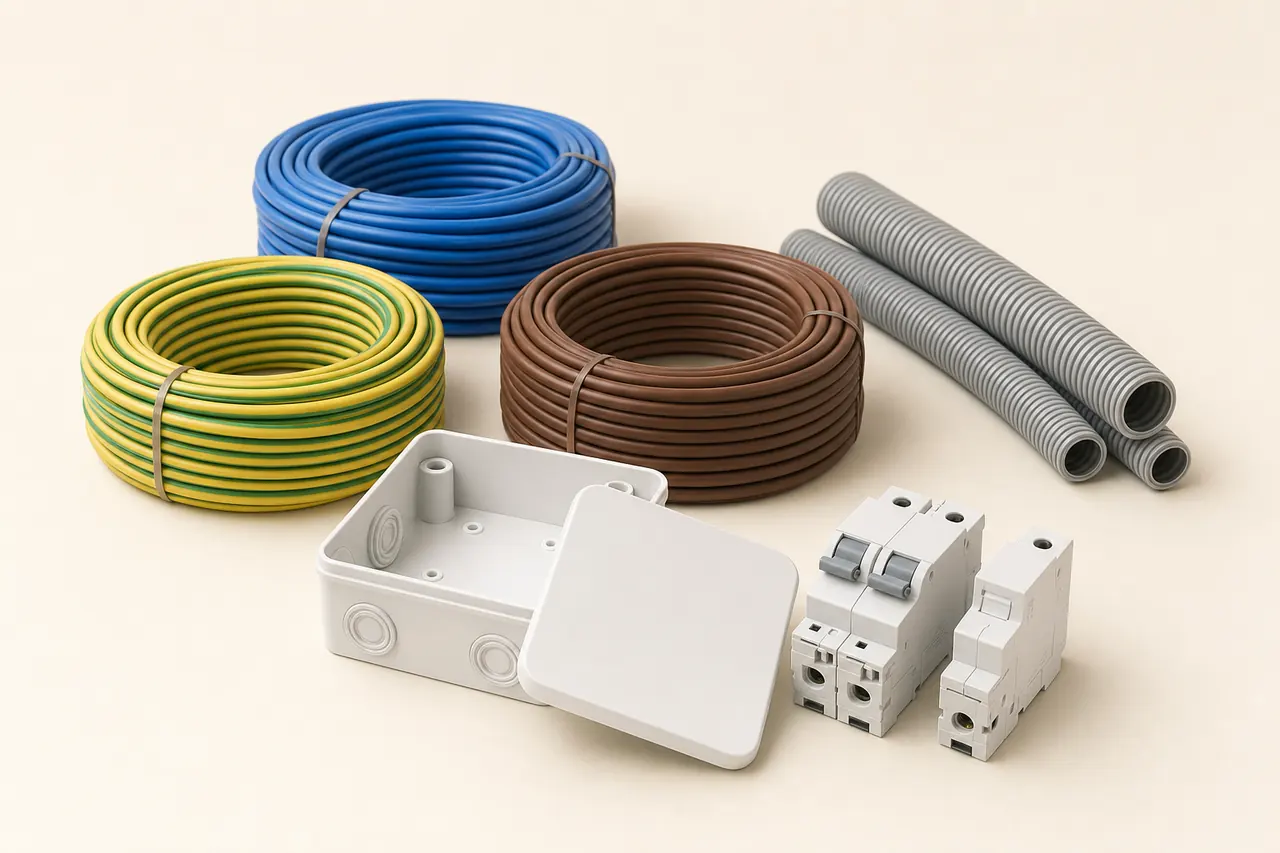
Start with the right material groups.
Cable and conductor scope
Group power, lighting and fire-rated circuits separately. For each line, include the required conductor description, voltage level and installation route so different cable types are not mixed.
Containment and support
Identify trunking, tray, conduit and accessories as their own supply scope. List bends, couplers, hangers and earthing connections that must appear inside each quotation.
Devices, boards and controls
Separate distribution boards, switches, sockets and control components from raw wiring. Describe each item by its function and required assembly so suppliers return the same equipment boundary.
A material price is only part of the package.
One schedule, clearly separated scopes. This is a request outline, not an installation drawing.
Included materials
List cables, conductors and busbar requirements by system and circuit type, with length, piece or set selected for each line.
Connections & interfaces
Define containment runs, device points, boards and support accessories. State which package supplies shared components such as earthing or junction boxes.
Confirm separately
Confirm connection, termination, testing, installation and site unloading as responsibilities to be confirmed with each supplier; a material quotation may not include them.
Six details that make offers clearer.
- Product designation and required size
- Give the exact product description, conductor count, cross-section or board rating stated in the approved project schedule.
- System and location
- Name the power, lighting, fire alarm or control system, plus the floor, zone or panel reference for every line.
- Operating values
- Enter voltage, frequency, fault rating or ingress protection from the project design; do not infer them from the visual reference.
- Installation and containment route
- Record whether the item follows tray, conduit, surface or embedded route, and list relevant bends or fixings nearby.
- Quantity and unit consistency
- Use metres, pieces, sets or drums consistently. Identify which terminations, glands or tags are included in each line quantity.
- Documents and phasing
- Request product data and declared substitutions against the schedule, with delivery dates separated by floor or work phase.
| Item & description | Quantity |
|---|---|
| E-01Power cable for floor 2 distribution, conductor count and cross-section per approved panel schedule. | 380 m |
| E-02Distribution board assemblies for zone B, including listed outgoing ways and enclosure accessories per schedule. | 12 sets |
Example quantities only; no live prices or supplier offers. Use your project schedule for final values and ask suppliers to list deviations.
Three checks before you decide.
Cable versus dressed circuit
Check whether the offered line covers only cable or also glands, lugs, supports and termination accessories before comparing totals.
Device versus connected point
Ask suppliers to state whether plates, back boxes, fixing screws and connector blocks are included for each outlet and switch line.
Exclusions and phased delivery
Compare technical substitutions, factory lead time and floor-by-floor delivery availability rather than one overall dispatch date.
Details worth clarifying early.
Can power and lighting cables share one electrical material request?
Yes. Arrange them in separate system groups with their own circuit references, quantities and delivery phases so suppliers can show exactly which part they cover.
How do I compare cable and containment offers consistently?
Compare each cable line with equivalent cable offers and each containment line with equivalent containment offers. Keep the unit, route and required accessories consistent for that item.
Which project values must I enter for distribution boards?
Use the approved panel schedule, including rating, outgoing ways, enclosure type and fault requirement. The guide structures the request; it does not select equipment for the design.
Turn your material schedule into a request.
Create a Matravo account to prepare your request. For account or sourcing-flow questions, visit support.