
Paints and coatings, priced surface by surface
Structure painting packages around each prepared surface, not a single product line. Separate primers, intermediate coats and finish coats so suppliers can compare the same finish system and measured scope.
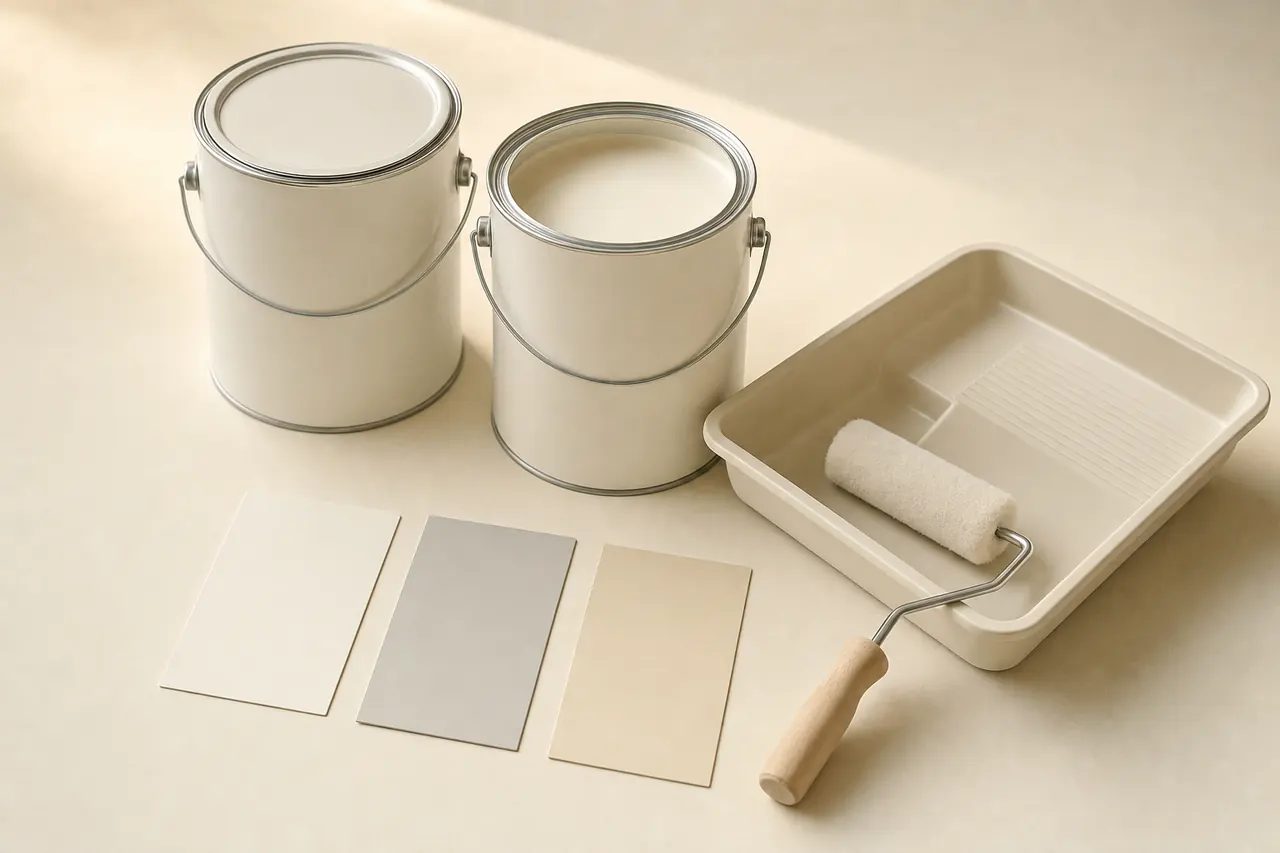
Start with the right material groups.
Interior wall and ceiling paints
Define the finish system per room, including primer, body coats and final sheen. Separate new plaster, repainted surfaces and special finishes by zone.
Protective and functional coatings
List coatings for exposed steel, pipe runs, bunds or hygienic areas as a distinct package. Confirm the project-prescribed system and any required evidence.
Timber and metal finishes
Separate wood stains, varnishes and direct-to-metal finishes from general wall paint. Name the substrate condition and the approved finish reference for each element.
A material price is only part of the package.
One schedule, clearly separated scopes. This is a request outline, not an installation drawing.
Included materials
Include paint, primer, sealer, undercoat and finish coats by room, zone or element, with measured area and surface condition stated.
Connections & interfaces
Allocate preparation materials, masking, cleaning, repairs and protection between the painting package and other trades.
Confirm separately
Confirm surface preparation, application, access, protection and waste removal separately from material supply unless included in the same package.
Six details that make offers clearer.
- Product designation and finish system
- Name the approved product or system and the project-prescribed performance or finish requirement for each surface type.
- Substrate and surface condition
- State whether the surface is new plaster, existing paint, steel, timber or another substrate so surface preparation can be priced correctly.
- Number of coats and build
- Record required coats and any minimum dry film thickness only as shown in the project specification or product data.
- Sheen and colour reference
- Use an approved colour schedule or sample reference for each zone. Avoid relying on a screen image as the visual acceptance reference.
- Measured area and deductions
- State the net paintable area per zone and the agreed treatment of openings, edges and linear features such as reveals.
- Environmental and access conditions
- Describe the application environment and any site constraints affecting curing, ventilation, protection or access for the painting work.
| Item & description | Quantity |
|---|---|
| P-01Interior wall paint system for office zones; colour and sheen per approved schedule, stated per coat. | 850 m² |
| P-02Protective coating for exposed steel elements; system and finish per project requirement, measured by element. | 220 m² |
Example quantities only; no live prices or supplier offers. Use your project schedule for final values and ask suppliers to list deviations.
Three checks before you decide.
Finish system breakdown
Compare primer, undercoat and finish coats separately so a lower price does not hide a thinner or incomplete system.
Substrate preparation scope
Confirm who carries out filling, sanding, cleaning and repairs before comparing paint-only rates.
Colour and sheen consistency
Agree the colour reference process and how adjoining areas or batches will be kept visually consistent.
Details worth clarifying early.
How do I separate wall paint from protective coatings?
Group decorative interior systems by room and finish, then list steel, timber or hygienic coatings as separate elements with their own surface preparation and build-up.
Should primers be measured as a separate line?
Yes, list each coat or preparation layer as its own line item where the project specifies it, so all offers use the same system build-up for comparison.
Turn your material schedule into a request.
Create a Matravo account to prepare your request. For account or sourcing-flow questions, visit support.