
Bricks and blocks, specified for the wall package
Prepare a masonry unit request that speaks to wall schedules rather than loose product lists. Separate bricks, blocks and lightweight units by elevation, cavity position and measured area. Keep mortar, ties, lintels and installation scope visible as separate lines.
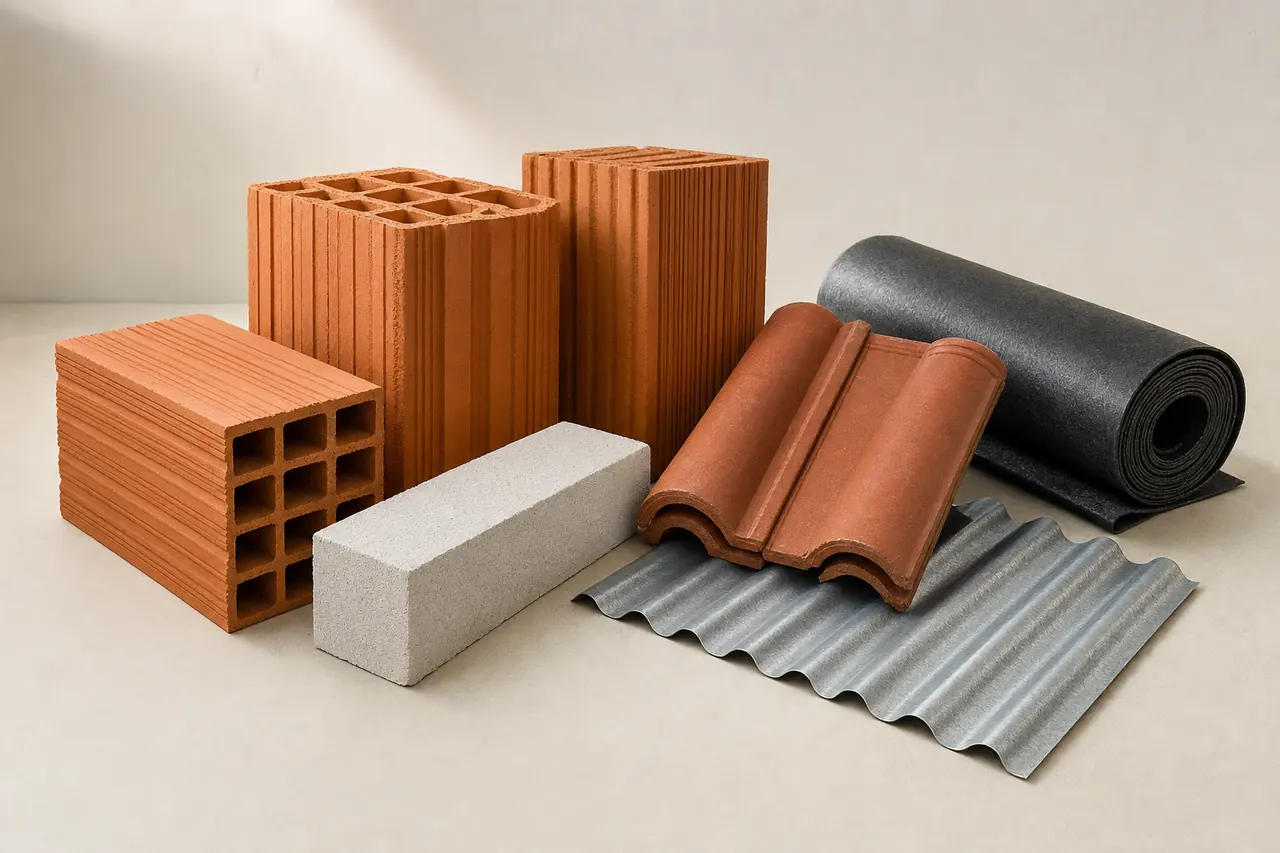
Start with the right material groups.
Clay and concrete brick units
Identify the brick type, face finish and wall position. State whether the request covers facing bricks, commons or both, and tie each line to the wall schedule.
Dense and lightweight block units
Separate solid, hollow and insulating block types by location. Name the unit family and dimensions so suppliers can match handling and coursing conventions.
Special shapes and wall accessories
Review lintel units, sill bricks, closure pieces and movement joints with the same wall references. List them as measurable lines, not as an undefined allowance.
A material price is only part of the package.
One schedule, clearly separated scopes. This is a request outline, not an installation drawing.
Included materials
Identify masonry units by wall zone, elevation or level, using numbered wall schedules and current drawings.
Connections & interfaces
Separate brick, block and lightweight unit packages and state which mortar, tie or lintel interfaces belong to this request.
Confirm separately
Confirm whether access, lifting, protection and installation are part of this supply scope or covered by another package.
Six details that make offers clearer.
- Exact product designation
- State the specified unit type, format and product name or a project-defined reference. Do not leave the unit family open to interpretation.
- Project-prescribed size
- Enter the required working dimensions or modular format from the wall schedule before requesting quantities.
- Unit mass and handling
- Ask the supplier to state unit mass and pallet configuration for lifting and site movement planning.
- Wall position and exposure
- Separate inner leaf, outer leaf, party wall and retaining or below-ground positions in the request.
- Cutting and bond pattern allowance
- Distinguish the net measured area from any cutting or bond pattern allowance the project requires.
- Sampling and appearance range
- Request the approved sample reference and the supplier's batch appearance statement before ordering facing units.
| Item & description | Quantity |
|---|---|
| B-01Facing brick units for elevation A outer leaf, type and format per wall schedule. | 14 m² |
| B-02Lightweight block units for level one internal partitions, format from partition schedule. | 260 m² |
Example quantities only; no live prices or supplier offers. Use your project schedule for final values and ask suppliers to list deviations.
Three checks before you decide.
Masonry unit versus full wall assembly
Check that the offer separates the unit supply from mortar, ties, bearings and any structural support lines.
Wall schedule coverage
Compare the bill lines against the numbered wall schedule so no inner or outer leaf area is missing.
Ready-built dimensions and coursing
Confirm which dimension is used for quantity conversion and whether coursing height affects the advertised coverage.
Details worth clarifying early.
Should facing bricks and common bricks carry separate lines?
Yes. Different wall positions, exposure and appearance requirements need separate lines so the quantity and finish basis can be checked.
Are movement joints part of a brick and block request?
State whether the request includes movement joint components, closure units or sleeved ties, or whether the installer supplies them separately.
Turn your material schedule into a request.
Create a Matravo account to prepare your request. For account or sourcing-flow questions, visit support.