
Pipes and fittings, requested by system and connection
Build a schedule that separates straight pipe lengths from fittings, supports and connection pieces. Name the service, material and size so suppliers quote the same material scope.
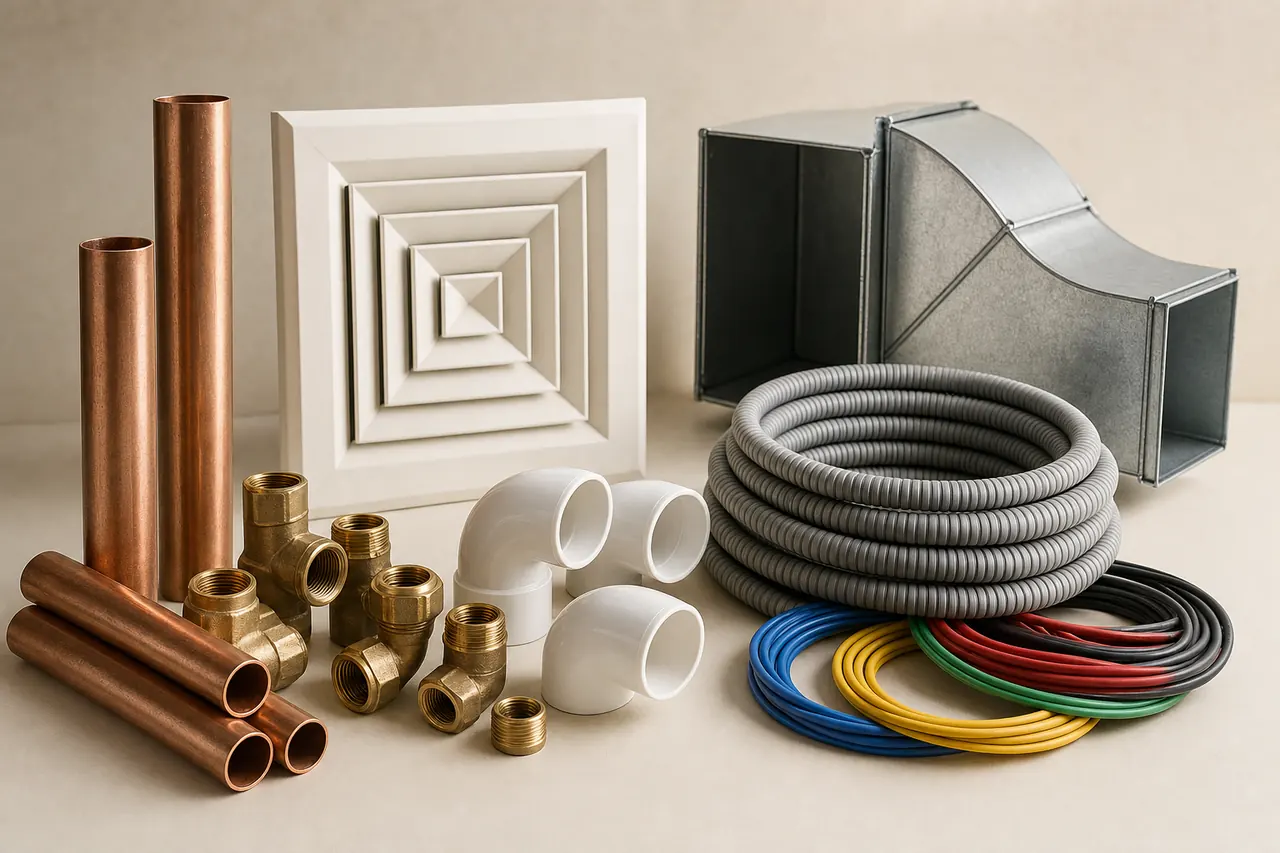
Start with the right material groups.
Pressure and supply lines
For water, gas and heating lines, record the project-prescribed pipe grade, nominal size and joint method before adding quantities.
Drainage and waste connections
Separate gravity lines from pressure pipework. Include bends, branches, access points and reducers as their own schedule lines, not embedded in metre rates.
Fittings and interface parts
List elbows, tees, couplings, flanges, caps and adapters by size and connection. Identify which supplier provides transition parts between pipe materials or equipment.
A material price is only part of the package.
One schedule, clearly separated scopes. This is a request outline, not an installation drawing.
Included materials
Identify straight pipe lengths by system, material grade, nominal size and connection type, with an agreed unit per line.
Connections & interfaces
List fittings, reducers, transition pieces, supports and sealing components separately. State which package supplies each shared or interface item.
Confirm separately
Confirm whether testing, flushing, pressure checks, unloading and installation are included or separately procured; the material request itself does not assume them.
Six details that make offers clearer.
- Product designation and size
- State the exact pipe or fitting designation, nominal diameter and project-prescribed dimensional or performance requirement from the approved schedule.
- System and service
- Name the fluid, gas or drainage service and its location so pipe grades are not mixed between systems.
- Material and connection method
- Record the base material, lining or finish and joint type. Add the drawing reference where the line connects to equipment.
- Fitting type and orientation
- Specify elbow, tee, reducer, coupling or flange and the direction or branch pattern required. Do not leave fitting shape to guesswork.
- Quantity and unit
- Use metres for pipe lengths and pieces or sets for fittings. Keep supports, gaskets and fasteners visible as included or separate lines.
- Documents and deviations
- Ask for product data sheets and a marked-up schedule showing any substitute. Separate delivery dates by floor, zone or system phase where relevant.
| Item & description | Quantity |
|---|---|
| PF-01Copper pressure pipe for hot water service; size and wall thickness per project schedule. Fittings quoted separately. | 80 m |
| PF-02Drainage branch fittings for waste stack connections; type and orientation per drawing schedule. | 35 pcs |
Example quantities only; no live prices or supplier offers. Use your project schedule for final values and ask suppliers to list deviations.
Three checks before you decide.
Pipe price versus connected run
Check whether fittings, reducers, flanges and supports are inside the pipe line or listed as separate cost items before comparing totals.
One material against another
Ask each supplier to confirm the proposed grade, wall thickness and joint system against the same schedule reference, not only the diameter.
Included and excluded interface parts
Compare who supplies transitions, equipment connections and sealing parts. A low line price can shift cost into missing fittings.
Details worth clarifying early.
Should I request pipe lengths and fittings on the same line?
No. Keep straight pipe in metres and fittings in pieces or sets. Jointing parts then stay visible and each supplier can price the same scope.
How do I avoid substitutions between pipe systems?
Name the service, material grade, size and connection method on every line, and attach the approved schedule or drawing reference for each zone.
Turn your material schedule into a request.
Create a Matravo account to prepare your request. For account or sourcing-flow questions, visit support.