
Protective tapes and films for temporary surface safeguards
Define every temporary protection line by the surface it shields, the residue risk you can accept and the exposure period before removal. Record roll width, length, adhesive type and backing material so quotations are ready to compare.
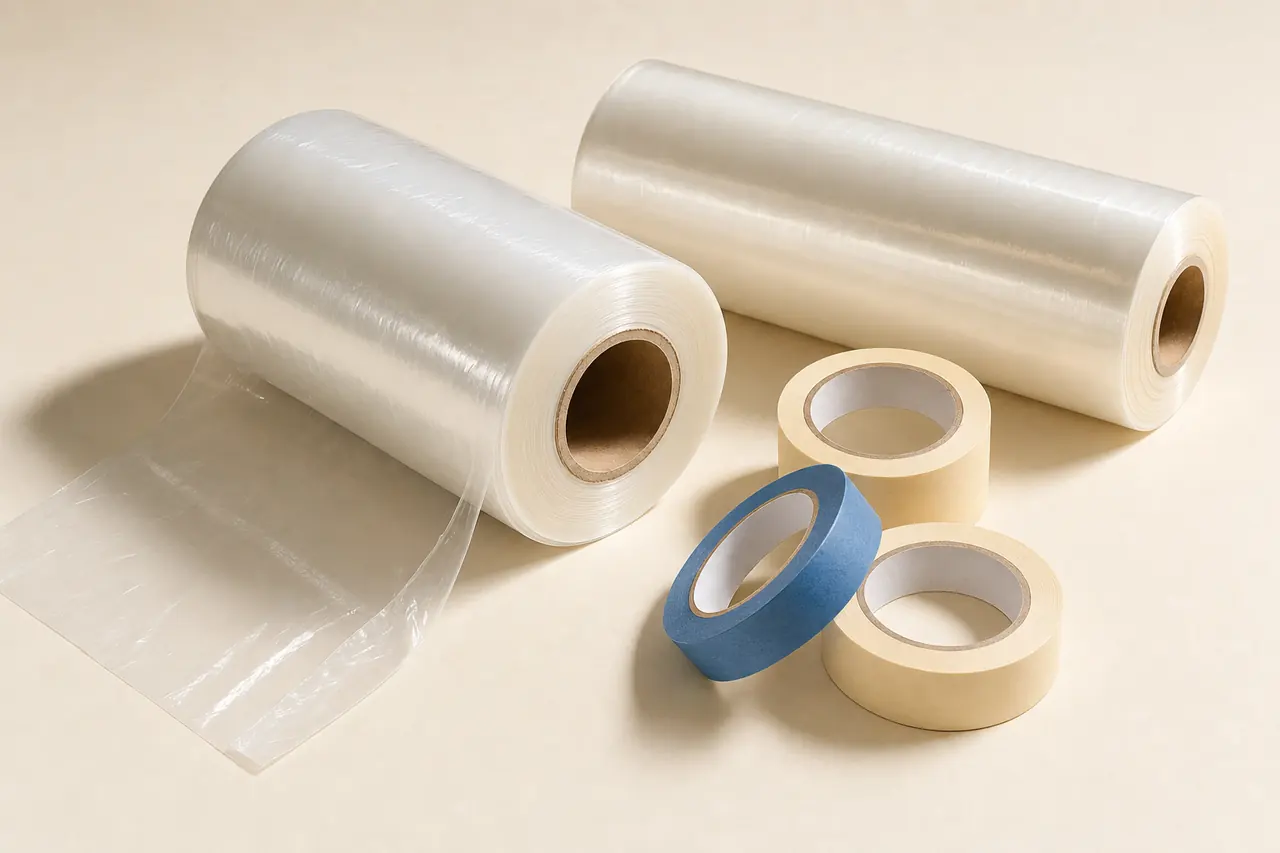
Start with the right material groups.
Hard surface protection
Separate films for glazing, powder-coated metal, laminate and stone. Ask the supplier to state adhesion level, clean-removal window and backing resistance.
Porous and textured surfaces
For concrete, brick, render and unfinished boards, request compatibility evidence for the actual surface condition. Confirm whether an adhesive film or a non-adhesive cover is suitable before selecting the protection.
Floor and traffic protection
Identify foot traffic, trolley load and spill exposure. Compare slip-resistant films with reusable boards only where the buyer confirms the expected duration.
A material price is only part of the package.
One schedule, clearly separated scopes. This is a request outline, not an installation drawing.
Included materials
Include surface protection tapes and films with the exact width, length, backing material and adhesive type from the project requirement.
Connections & interfaces
Include related application aids such as release liners, dispensers or joining tapes where they belong to a named protection line.
Confirm separately
Confirm removal labor, waste collection, extended exposure and any residue correction separately. The buyer confirms included and excluded services for each line.
Six details that make offers clearer.
- Product designation and performance
- State the exact product or adhesive family and the project-prescribed performance or surface size requirement before comparing alternatives.
- Surface to be protected
- Name the substrate and surface finish, including porous, textured, coated or polished conditions.
- Adhesive type and residue behavior
- Ask for the adhesive class and its clean-removal expectation for the specified surface after the stated exposure period.
- Backing and roll dimensions
- Record backing material, thickness, roll width and roll length in measurable units for each protection line.
- Exposure period and removal window
- Define the minimum and maximum period the film must remain cleanly removable without adhesive transfer.
- Environmental exposure during use
- Identify indoor, covered or direct weather exposure and whether UV or temperature stability is required for that period.
| Item & description | Quantity |
|---|---|
| PTF-01Low-tack film for sealed stone landing areas; clean removal after eight weeks to be confirmed by supplier. | 600 m² |
| PTF-02High-clarity glass protection film for lift lobby panels; residue-free removal after four weeks requested. | 240 m² |
Example quantities only; no live prices or supplier offers. Use your project schedule for final values and ask suppliers to list deviations.
Three checks before you decide.
Roll area versus net coverage
Check whether overlaps and edge trimming are already included before comparing the supplied coverage area.
Clean-removal window
Confirm the stated removal period matches the construction schedule, not only the product's ideal-use range.
Substrate and finish compatibility
Review supplier statements for coated, porous and heat-sensitive surfaces to catch residue transfer risks.
Details worth clarifying early.
Can a lower-tack film be used longer than its stated removal window?
Ask the supplier to confirm whether extended exposure affects residues, adhesive transfer or film breakage on the specified surface.
Is a thicker backing always the right choice for floor protection?
Thickness alone does not confirm performance. State the traffic type, surface condition and duration so the right backing and adhesive combination can be identified.
Turn your material schedule into a request.
Create a Matravo account to prepare your request. For account or sourcing-flow questions, visit support.